If mental health reform is about dignity, environment cannot be an afterthought
24 June 2026
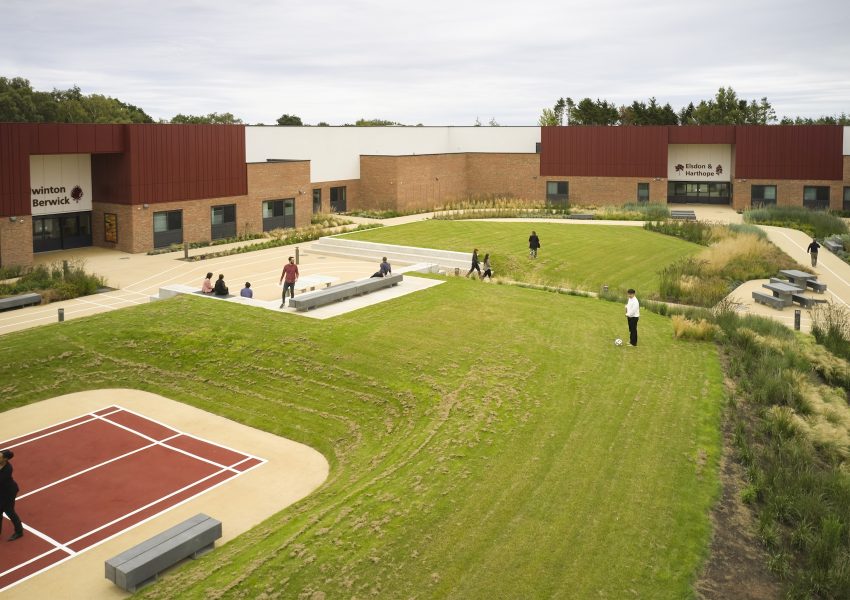
There is a moment early in our conversation with Charlotte Burrows and Philip Ross where the discussion shifts from principle into something much more tangible. It is not about legislation, funding or workforce pressures. Instead, it is about a door.
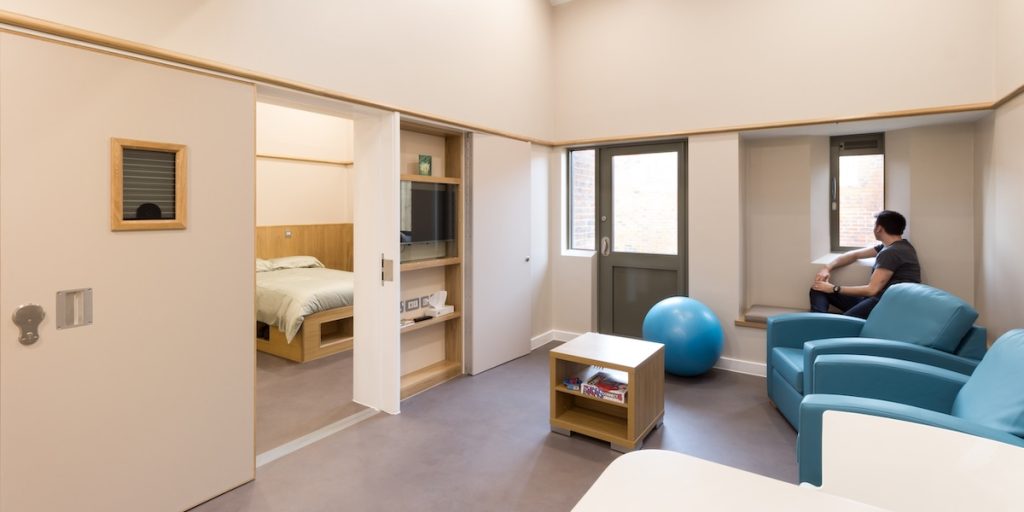
In many inpatient mental health settings, patients cannot open their own bedroom door without asking to do so. If the staff member they need is busy, they wait. What begins as a design decision, often made with safety in mind, can quickly become something more significant. Over time, it creates repeated moments where autonomy is reduced, independence is interrupted, and the balance of power becomes unmistakably clear.
Burrows and Ross spend much of their professional lives thinking about moments like this. Through their work with the Design in Mental Health Network, as CEO and chair respectively, they bring together perspectives from clinical practice, estates, policy and lived experience, making the case that environment should be seen not as a backdrop to care, but as part of care itself.
For Ross, the challenge is not that the system lacks direction. The principles underpinning mental health reform are increasingly clear. Dignity, autonomy and least restriction now sit at the centre of conversations about better care. The difficulty, he argues, is that many of the environments in which care takes place have not evolved at the same pace.
Inpatient settings remain necessary, but necessity does not automatically make them therapeutic. For people already experiencing distress, fear or a loss of control, environments that feel institutional, restrictive or impersonal can deepen that experience rather than ease it.
“Patients do not experience buildings, systems and processes separately. They experience one environment, and every part of it shapes how care feels.” Charlotte Burrows
The environment begins before admission
Burrows approaches the issue from a wider systems perspective. For her, the environment does not begin when someone arrives on a ward. It often begins much earlier, with the journey into care.
She reflected on accounts of people being transported in secure vehicles, uncertain about where they are going and disconnected from what is happening around them. By the time they reach a hospital or place of safety, the experience of care has already been shaped.
That matters because mental health care is not experienced as a sequence of separate stages. From transport and assessment to admission and treatment, each part of the journey influences the next.
It is here that Burrows and Ross converge on a central idea. The environment is not neutral. It shapes how people feel, how relationships form, and how care is ultimately experienced.
For Burrows, this can be seen in everyday design choices. Noise, lighting, layout and privacy all influence emotional regulation, communication and distress levels. Those impacts are often felt most acutely by people already experiencing mental ill health, trauma or wider disadvantage.
Good design, by contrast, tends to benefit everyone. The challenge is not understanding that principle but applying it consistently.
“A door that cannot be opened may feel like a safety feature to staff, but to the person behind it, it can become a daily reminder of lost autonomy.” Philip Ross
Design as a clinical issue
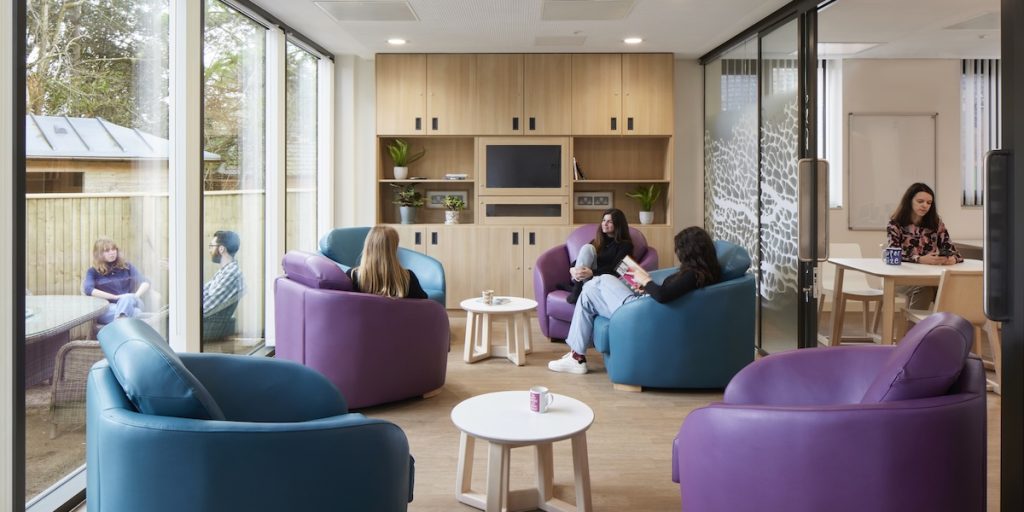
Ross pointed to the variation that still exists across the country. Some organisations are investing in environments shaped by newer thinking around recovery, autonomy and trauma-informed care. Others continue to work within estates designed around older assumptions about control and containment. As a result, where someone receives care can still shape how that care feels.
Part of the reason, Ross believes, is that design still struggles for credibility within parts of the system. It is often treated as aesthetic, rather than operational or clinical.
Yet its impact is measurable. Design can influence patient safety, incidents of violence and aggression, staff stress, workforce retention and even length of stay. A well-designed environment can reduce pressure on teams and support calmer, more therapeutic interactions. A poorly designed one can add friction at almost every stage.
Burrows believes the same applies beyond buildings. From a patient perspective, physical environments, digital systems and clinical processes are not experienced separately. They are experienced as one joined-up reality. A well-managed process delivered in a confusing environment can still create anxiety. Equally, a calming physical space cannot compensate for fragmented communication or poor systems.
Improving care, she suggested, means understanding how those elements work together. That becomes even more important as health and care increasingly embraces digital-first approaches. Digital access is always shaped by the environment in which it takes place, whether that is someone’s bedroom, a kitchen table, a school corridor, a GP waiting room or a community hub. Those settings can either support privacy, dignity and meaningful engagement or undermine them, reminding us that good design extends well beyond the walls of inpatient units.
“The environment begins long before someone reaches a services front door. For many people, it starts the moment they enter the system.” Charlotte Burrows
Whose voice shapes the environment?
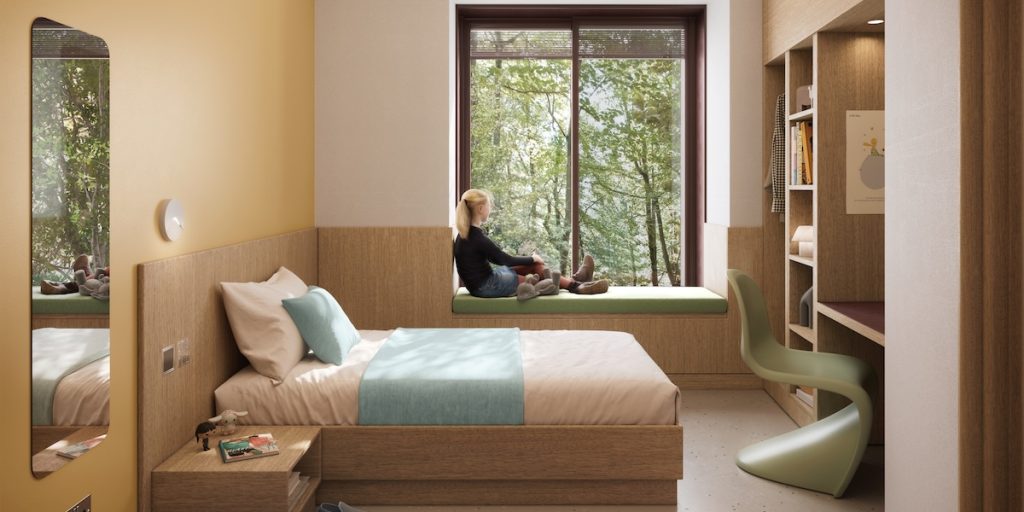
That leads to a deeper question about who gets to shape the environments in which care happens. Poor mental health environments do not simply reflect inequality; they can reinforce it, adding barriers for those already least well served.
Both Burrows and Ross are careful to distinguish between consultation and genuine co-production. There is growing recognition that lived experience should shape mental health services, but both warned that the language of co-production can sometimes move faster than the practice itself.
Burrows believes meaningful co-production starts early, with people helping to define the problem, not simply responding to solutions already designed. Ross argued that lived experience has the greatest impact when it is embedded where strategic decisions are made, influencing priorities, investment and organisational culture.
That increasingly reflects the role the Design in Mental Health Network is trying to play. There is already a strong evidence base around what good environments look like. The challenge now is helping the system translate and implement what is already known into everyday practice.
That is because if mental health reform is genuinely about dignity, autonomy and least restriction, those principles cannot exist only in policy or legislation. They must be felt in the places where care actually happens.
“If dignity and least restriction are the ambition of reform, our environments cannot continue to reflect assumptions from another era.” Philip Ross
Stay up to date with insights like this one by following Thalamos on LinkedIn or joining our mailing list.