You are already part of a system, whether you like it or not: Rob Webster on collaborative leadership
03 August 2026
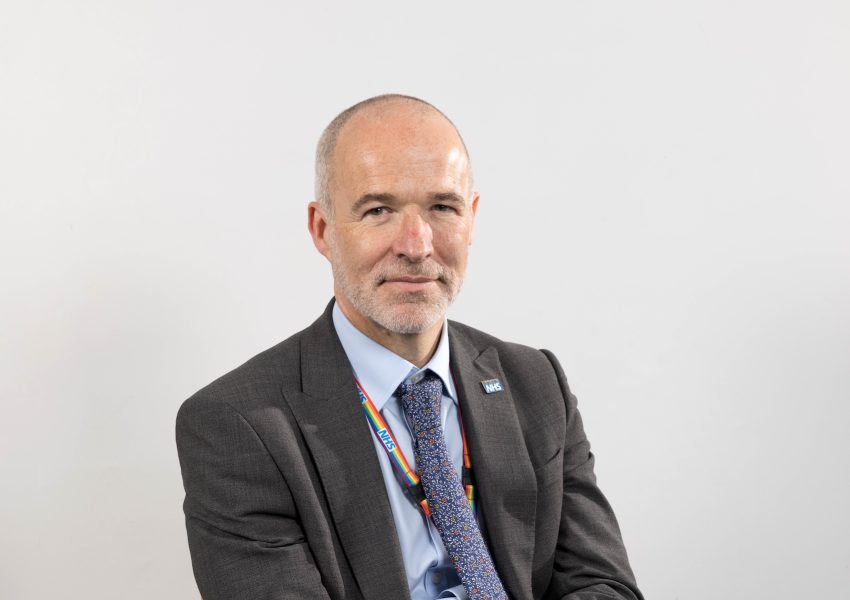
After a career spanning Whitehall, NHS providers and integrated care, Rob Webster reflected on what good leadership really requires and what it takes to make collaboration work in practice.
Rob Webster spent nearly four decades on both sides of the healthcare system, in the room where policy gets written and, on the ground, where it has to actually work. He started as a statistician in the Department of Health, then worked on the NHS Plan and inside the Prime Minister’s Delivery Unit. From there he crossed over: primary care trust chief executive, then NHS trust chief executive, then chief executive of the NHS Confederation, then chief executive of the West Yorkshire and Harrogate Integrated Care System from where he retired earlier in 2026.
Looking back, he doesn’t describe the system through its structures. He describes it through the people in it. “Whichever element of the system they were operating within, there were groups of people who wanted to make things better.”
One of his first jobs was cleaning up after a failed dental contract, a mess of politics, evidence and professional bodies that taught him early that decisions made at the centre are never abstract. They land on real services, and on the people waiting for care.
That’s shaped how he treated policy from the other side of the divide. His instinct, when an instruction landed from above, was to assume the people who wrote it believe it will work, then ask what it’s trying to achieve rather than write it off. That doesn’t mean deferring to it. It means frontline leaders can push back with something more useful than resistance: evidence of what’s already working. “We’re doing this. This is our practice. We’re learning this. Do you want it?”
The harder problem isn’t any single policy; it’s the pile-up. While each initiative from the centre might be perfectly reasonable on its own, several dozen of them landing on the same trust at once is not. “Individually, those changes will be reasonable. Collectively, they’ll swamp the system.” His answer is blunt: national leaders need discipline about what actually matters and what frontline capacity can absorb, because the people implementing the tenth reasonable change of the year are the same people delivering care that afternoon.
Everything, he said, comes back to one relationship. “If you start with the people, the person who wants help and the person who can give it to them, and you want to make that interaction the simplest and best it can be, that’s your job.”
Three horizons, held together
Webster framed a chief executive’s job as three questions running in parallel, not in sequence. Are services safe today? What needs to happen this year? Is the organisation moving toward something better long-term? The job is holding all three at once, hardest of all when lots of things are on fire.
His West Yorkshire position taught him that collaboration can create capacity rather than just more meetings, but only if you resist the instinct to centralise everything. His system put most of its energy at neighbourhood and place level, and kept work at the West Yorkshire tier narrow: only the things that genuinely needed collective leadership. Leaders advocated for one another and trusted colleagues to act on the partnership’s behalf without needing everyone in every room. Governance and accountability didn’t disappear, they just sat alongside something else. “The sense of shared ownership of the solutions, and peer respect and challenge, allows you to keep on top of the fires together.”
Slipping back into hierarchy
The ambition behind integrated care systems was right, in Webster’s view: move the NHS from institution-by-institution planning toward population health, because so much of what determines whether someone lives well has nothing to do with hospitals. “Having somewhere to live, someone to love and something to do will determine whether you live a full life,” he added. “Too many people don’t.”
But the model has been fighting its own architecture. The 2022 Health and Care Act made ICBs statutory bodies, which reintroduced exactly the hierarchy the policy was meant to move away from. That happened at the same time as ICBs were losing 30% of their staff, with a further 50% cut later targeted. New organisations, built to work as equal partners with councils and the voluntary sector, were told to cut headcount before they’d had the chance to establish how they worked at all.
Where it’s succeeded, Webster argued, it’s because leaders treated it as a different kind of leadership rather than a different org chart. “You often heard people say: ‘Give me the power to tell people what to do’. Well, it’s not going to work. You need to be a different kind of leader. And it can’t be leadership alone. Regulation, finance, workforce and data all have to move together too. You can’t integrate services without integrating the workforce. You can’t integrate services without integrating data.”
Still treated as add-on
Webster’s frustration here is specific: mental health gets discussed as one category, when it actually spans everything from wellbeing and prevention to acute illness. It needs to sit inside physical and social care design from the start, not bolted on afterward. A person off work with a physical injury develops anxiety. A person with severe mental illness has physical health needs too. “Modern healthcare systems look after the mental, physical and social needs of people,” he commented.
Webster pointed to earlier intervention, for instance emotional support built into schools, as the kind of thing that stops problems escalating into referrals that specialist services can’t actually solve.
But he’s equally clear that the push toward integration and prevention can’t be used to look away from the acute end. People needing inpatient mental health care are routinely sent hundreds of miles from family or moved on before they’re ready because a bed’s needed elsewhere. A shortage of gender-specific psychiatric intensive care beds is one recurring example of the mismatch between what’s available and what people actually need. Pressure that would trigger a COBRA-level emergency response in physical health has simply become ordinary in mental health services. “We have to get real about the pressures in our mental health hospitals and beds, and the fact that people will need beds and they will need treatment.”
What’s actually in a leader’s hands
His advice to new chief executives starts with alignment: know what you’re accountable for and what authority you actually have and be honest about what’s genuinely yours to decide. Get that straight and the weight of the job becomes carriable. Bad things will still happen, but the job is how you respond and what you learn from it.
Beyond that, he thinks two things matter more than anything else a chief executive does: the story they tell about the organisation, and where they choose to put their attention. People notice what gets emphasised and what gets challenged. Say it enough, consistently, and it becomes the thing the whole organisation moves toward.
He also thinks leaders underrate how much healthcare work is just hard with distress, frustration, illness and death, day after day. Part of the job is creating moments of recognition inside that, not pretending it away. When he asks rooms full of NHS staff why they do the job, the porter and the chief executive tend to give strikingly similar answers. Leadership, in his view, is mostly the work of connecting people back to that answer and making it visible.
“It’s about consciously thinking about the system that you operate in, who you can work with, and the fact that they will help you. Nine times out of ten, that will be the biggest transformational step you can take as a leader.”
Stay up to date with insights like this one by following Thalamos on LinkedIn or joining our mailing list.
Read some of our other NHS executive interviews: