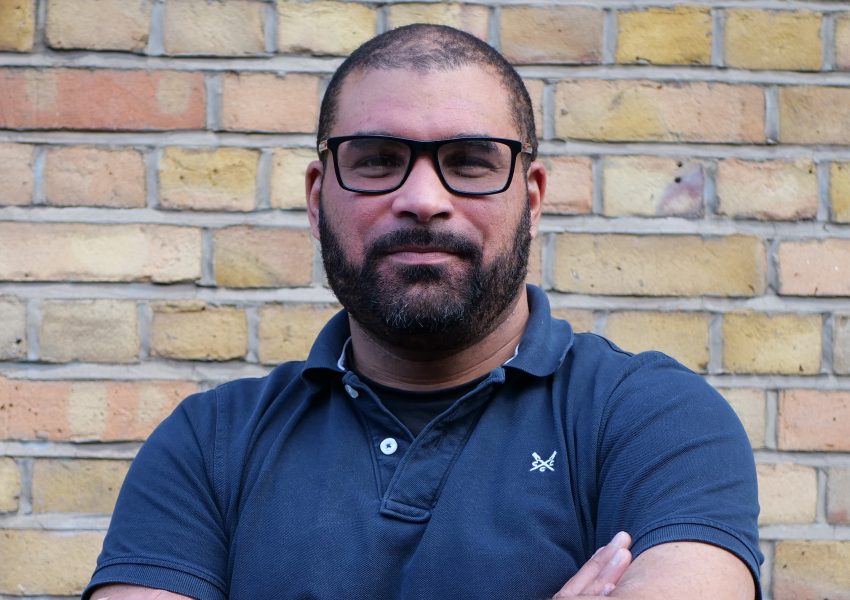
At 21, studying for a master’s degree, Steve Gilbert OBE experienced depression for the first time. Looking back, he believes he had been struggling much earlier. However, this was the moment everything became impossible to ignore.
What frightened him most was not how unwell he felt. It was that he had no language for what was happening. “I’ve had worse experiences objectively since then,” he said. “But that was scary because I didn’t know what was going on.”
Seeking help proved just as formative. His GP struggled to reconcile the reality of his mental health with the image of a young student succeeding at university. “I didn’t look like I was unwell. That is still the experience of so many people and it’s so invalidating.”
Those two things, the absence of language and the experience of being disbelieved, still travel with him into every room he enters. They explain why he notices wording others overlook, why he challenges assumptions embedded in services, and why he instinctively asks the same question whenever mental health is being discussed: what will this feel like for the person experiencing it?
That perspective has carried Gilbert from national anti-stigma programmes and work on Black mental health inequalities through to shaping national policy and Mental Health Act reform. Yet despite working at the highest levels of the system, his focus has remained consistent.
“The starting point for me is always the person in crisis. It’s not the system, the professionals, or the policy. It’s the person.”
A slide he never forgot
When Gilbert first met Thalamos founders Arden Tomison and Ross Tomison, one slide stopped him. At its centre was a person in crisis, surrounded by every organisation involved in responding to them.
“I can do business with these people,” he thought. It was something he had rarely seen: technology being designed around the individual whose life was being affected, rather than around the organisations or workflows responding to them. “All these years later they are still holding up their end of the bargain.”
Calling things in
That shared philosophy sits at the heart of the Responsible Innovation Group. Gilbert’s role is not to represent lived experience as a token voice. It is to ensure that every product discussion considers the experience of the person whose liberty, dignity, outcomes and recovery may be shaped by those decisions.
“This isn’t about calling things out. It’s about calling things in, bringing lived experience into the room so it can shape what’s being built, not just critique it afterwards.”
That often means paying attention to details others might dismiss as insignificant. He recalled reviewing the wording of a system message that unintentionally implied blame. Technically, nothing was wrong with it.
“If I had seen that message at my lowest point, it would have cut deep.”
For Gilbert, these are not cosmetic changes. They are decisions that shape how people experience some of the most vulnerable moments of their lives.
“You can have a technically excellent form that completely misses the human experience. That’s what we’re trying to avoid.”
Innovation is not always good
He is also alert to a more fundamental question: whether innovation is genuinely improving the lives of the people it is meant to serve, or simply making systems more efficient.
“Not all innovation is good. Just because you can build something doesn’t mean you should,” he added
Gilbert believes digital systems have enormous potential, but only if they remain grounded in the realities of mental health crisis. And he believes that balance is only possible because the Responsible Innovation Group holds different forms of expertise to account equally. Clinical safety, mental health law, information governance and lived experience all carry the same weight.
“My sign off is as important as Iain’s and Debs’. I’m not there to tell my story. I’m there to help make decisions.”
Holding that
As Thalamos has grown, Gilbert has become increasingly focused on protecting the culture that first attracted him. Products, customers and partnerships will evolve. But the organisation must keep returning to the same question.
“How do we make sure that this is an organisation that can always come back to say, ‘Is this the right thing for that unheard and vulnerable person?'”
When he thinks about the work of the Responsible Innovation Group, he does not picture legislation or product roadmaps. He pictures someone frightened, overwhelmed and searching for help. Someone who has tried and been let down. Someone now facing an assessment, and potentially detention.
That person has become the measure against which he judges every conversation.
“When we are doing our work, I feel that responsibility. We are holding that.”
If innovation meet that responsibility, and hold the person at the centre, then it has the potential to make not only services better, but experiences more humane.
If you’d like to find out more about the structure and process Thalamos Responsible Innovation Group then visit our dedicated webpage or read about its origins in our feature.