Bringing physical health, mental health and safeguarding together under one roof sounds like a structural fix. In one case, it ended up hinging on something else entirely: how people work with each other.
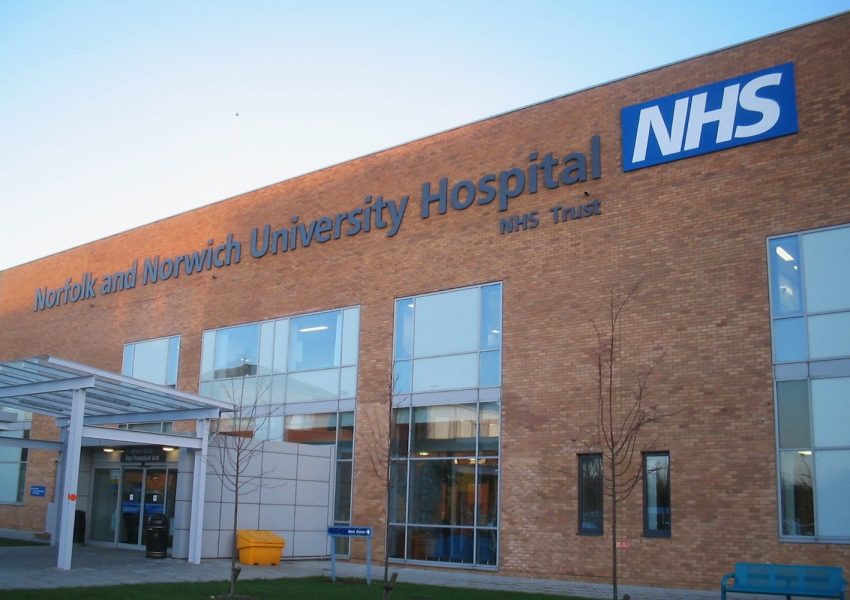
An emergency department was never really built to hold what now arrives through its doors: substance misuse, dementia, safeguarding concerns, self-harm, mental capacity assessments, or a homelessness case that’s also a diabetes case. At Norfolk and Norwich University Hospital NHS Foundation Trust, all of it converges on one place, often in the same few hours. The Acute Trust’s answer has been its Complex Health Hub, where safeguarding, dementia, learning disability, substance misuse, mental health and mental capacity are folded into one team rather than five.
Two people inside that hub see the problem daily from slightly different angles. Tina Chuma, the Trust’s Head of Complex Health & Safeguarding, has watched what counts as a mental health presentation change almost beyond recognition over sixteen years there. “What we defined as mental health when I first started, to now, it’s so different,” she said. Hannah Mallender, the Trust’s mental health service manager, sits closer to the clinical picture, leading the team that meets patients at their most acute points.
Why people end up in A&E
Some of that shift over time is about access rather than illness itself. Community mental health teams in Norfolk and Norwich are, as they are in so many other areas around the country, challenged and have caseloads carrying nothing close to the acuity and risk they held ten or fifteen years ago. “Some people need that face-to-face contact,” Mallender said, and A&E is where they know they’ll get it. Chuma pointed to waiting times as part of the same picture; with young people referred to mental health support facing long waits. Neither offers much comfort to a parent watching a child in crisis. “You are going to turn to ED,” she said, “because you’re desperate.”
To help staff better support this growing need, Norfolk and Norwich run mental health training across the hospital, including simulation exercises for scenarios like eating disorders, overdoses and de-escalating a distressed patient. Groups of fifteen or twenty staff practise what to say and how to sit with someone in crisis, in a room where getting it wrong doesn’t matter.
Progress is being made, though it hasn’t shifted everything. As Mallender puts it, there’s still “a sprinkling of negativity, a general malaise and exhaustion: around frequent attenders, on both the paediatric and adult sides of the hospital.
Telling the story once
Before the Complex Care Hub existed, a patient with overlapping needs might be referred separately to a substance misuse nurse, then to safeguarding, then to a mental health liaison team working to an entirely different set of targets. “The patient only has to tell their story once,” Chuma said. “We now end up asking ourselves: ‘How did we miss the intersections?’ It’s very rare to have one patient who just presents with one thing.”
The thinking traces back to research on adverse childhood experiences: ask what happened to someone, not what’s wrong with them. Chuma pointed to a hypothetical diabetic patient who is also homeless and using substances. Treating the diabetes is the easy part, harder is understanding why someone won’t engage when, in her words, “they’re going through hell within their life”. She’s sometimes heard colleagues ask why a patient is “choosing” to be homeless. “I don’t think anyone chooses to become homeless,” she added. “It’s the impact of their trauma.”
Different priorities, same patient
Working across organisations is where both get most candid. The hospital, the neighbouring Mental Health Trust and the Local Authority are all, in Chuma’s opinion, “working to different kind of policies”, with priorities that don’t automatically line up.
The hospital wants a patient in crisis moved into a mental health bed, partly because A&E is the wrong environment and partly because of bed flow. Meanwhile the Mental Health Trust weighs that referral against every other case it’s reviewing across the region. “Sometimes it does feel like we’re going at loggerheads,” Chuma said, even though everyone wants the same outcome. A process exists for escalating disagreements, but it “often leads to meetings about meetings”.
Discharge decisions carry a particular weight for both. Mallender described needing to be confident enough to push back if she doesn’t believe a patient is safe to leave, whatever the pressure to free up a bed. Chuma’s rule is simple: if she isn’t certain, she asks someone else or delays the discharge, which is going to “upset some people”. But at the end of that day they’ll be safe.
What they’d build, given the choice
In an ideal world, both Chuma and Mallender would like a dedicated mental health emergency department, staffed around the clock and shared across their hospital group, so a patient in crisis lands with the right specialists rather than in a loud, chaotic waiting room. Mallender was clear it would only really work if it never closed: “If you close up at eight o’clock, those patients have still got to go somewhere.”
Chuma would also put investment further upstream into community provision, so fewer people reach crisis point at all. Follow the thread back far enough, both agree, and it reaches poverty, a force well beyond anything a hospital trust can fix alone.
Asked what they wish the public understood, Chuma went first. Mental health is still something some families and cultures struggle to name, with that silence often falling hardest on young men who reach crisis before anyone recognises how much support they need. She also wants people to see beyond the headlines about queues and pressure to the staff behind them. “Everybody’s doing a bloody marvellous job,” she said, pointing to teams working every day to help people feel safer, whether their needs are physical, psychological or both.
Mallender’s answer returned to the role of the Acute Trust itself. It is not a Mental Health Trust and cannot provide every part of a person’s care, but that does not mean its contribution is small. Its mental health team is growing, staff are becoming more curious and confident, and positive feedback is helping the service continue to improve. An emergency department may not be able to resolve a crisis overnight, and recovery may take weeks, months or sometimes years, but it can listen, respond with compassion and help someone take the next step. For a hospital that increasingly acts as the gateway into wider support, that is both a significant responsibility and a source of real hope.
Stay up to date with insights like this one by following Thalamos on LinkedIn or joining our mailing list.
Read more frontline voices: