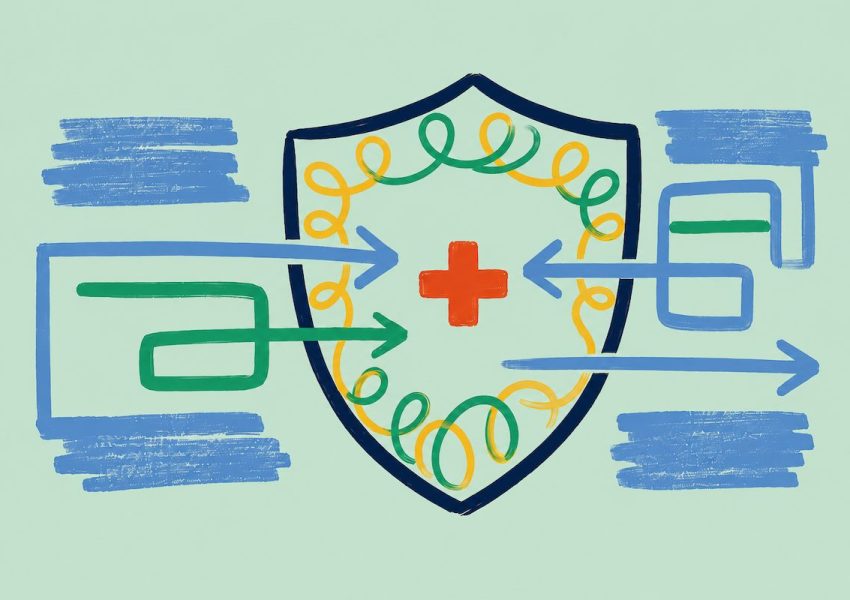
What happens when a feature works exactly as intended but still puts someone at risk? Clinical safety by design exists to answer that question, embedding safety from a product’s first idea through its entire lifetime.
In healthcare, innovation is often associated with speed, efficiency and transformation. In most industries, software is released deliberately imperfect whereby a basic version goes out first, and it’s improved gradually based on real-world feedback. But healthcare can’t work this way. A product can’t go out into the world half-finished and be fixed later, because the cost of getting it wrong isn’t inconvenience; it’s patient harm. Every release, however early or minimal, has to be safe from day one.
Digital systems also inevitably influence how people work as they shape decisions, alter workflows, change communication patterns and affect the information available at critical moments. Even relatively small design choices can have significant consequences when they are introduced into complex healthcare environments. Clinical safety by design recognises that reality and seeks to identify potential risks before they become problems in practice.
Designed to support judgement, not replace it
Clinical safety by design therefore requires looking beyond whether a feature functions as intended. A clinically safe product must also consider how it will be used in reality, the shortcuts that could be taken, if it is used at the wrong time, by the wrong person or if the process could be a block to a professional delivering care. A feature that appears useful for one professional group may create difficulties or assumptions elsewhere in a pathway. A workflow that saves time in one setting may introduce risk or ambiguity in another. Responsible innovation requires understanding the wider system impacts before products reach the frontline.
One of the most important principles of clinical safety is recognising that technology should support professional judgement rather than replace it. Digital tools can help professionals access information, reduce duplication, improve visibility and minimise avoidable error. They should not remove the need for critical thinking, reflection or individual decision-making.
This is particularly important in mental health settings, where decisions are often complex, nuanced and highly individual. Technology can support consistency, but reducing unwarranted variation should never come at the expense of thoughtful clinical judgement. A safe system helps professionals make better, more informed decisions; it does not make those decisions for them.
Embedding clinical safety from the inception of a product concept also creates stronger products. When safety considerations are introduced early, they influence the design of workflows, interfaces and processes before development resources have been committed. Potential risks can be addressed and prevented through better design rather than mitigated later through warnings, workarounds or additional controls.
This approach reflects a broader philosophy that prevention is more effective than correction. The safest products identify risks before they become reality.
Built in from the start
Clinical safety also requires recognising the complexity of real-world healthcare. Mental health pathways, for example, involve clinicians, nurses, approved mental health professionals, administrators, legal teams, police officers, social care staff and many others. Each group experiences different pressures, works in different environments, with different records, systems and policies and relies on different information. Designing safely means understanding how technology affects the entire pathway, not just a single user group.
That perspective is particularly valuable when introducing digital transformation into established services. Digitisation is often described as a way to improve efficiency, but its greatest contribution may be improving consistency and observability. Paper-based processes can hide variation, delays and risks, while digital systems make them visible. Digital processes provide opportunities to identify unwarranted variation, improve oversight and support more consistent practice across organisations.
Clinical safety therefore extends beyond preventing individual incidents; it is also about creating safer systems. Better visibility of processes, clearer communication, improved audit trails and more reliable information all contribute to safer care. They help organisations identify problems earlier and provide professionals with greater confidence in the systems they rely upon.
Importantly, clinical safety is not the same as compliance. A product can satisfy technical requirements and still fail to support safe practice. True clinical safety requires continuous learning, challenge and improvement. It requires organisations to ask not only whether a product meets a standard, but whether it genuinely helps professionals deliver safer care.
Safety as an ongoing standard, not a checkbox
That is why constructive challenge is such an important part of responsible innovation. Safe products are rarely created by groups of people who agree on everything. They are created through discussion, scrutiny and the willingness to test assumptions before they become embedded in practice. Bringing together different perspectives helps identify risks that might otherwise be missed and ensures decisions are considered from multiple viewpoints.
As healthcare continues to evolve, the role of technology will inevitably expand. New opportunities will emerge through automation, artificial intelligence, data analysis and digital communication. These developments offer significant potential benefits, but they also create new responsibilities. Clinical safety by design ensures that innovation remains focused on improving care rather than simply increasing efficiency.
For Thalamos and the role it plays our Responsible Innovation Group, clinical safety is ultimately about trust. Professionals must trust that the systems they use will support them in high-pressure situations. Organisations must trust that digital tools will help them deliver safe services. Most importantly, people receiving care should be able to trust that technology is being used in ways that protect their interests and support better outcomes.
Clinical safety by design means making safety part of the product itself, embedded through the product lifecycle to the benefit of all.
If you’d like to find out more about the structure and process Thalamos Responsible Innovation Group then visit our dedicated webpage or read about its origins in our feature.
You can also read interviews with each RIG member: