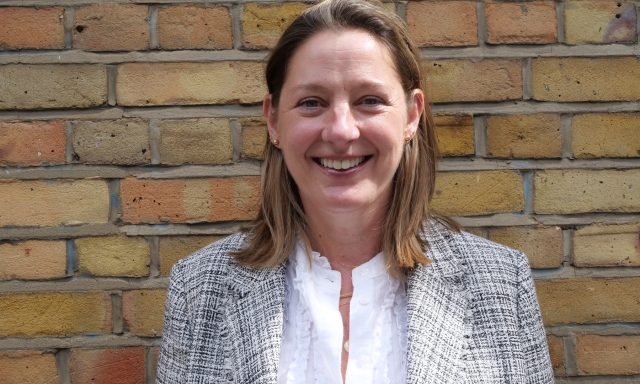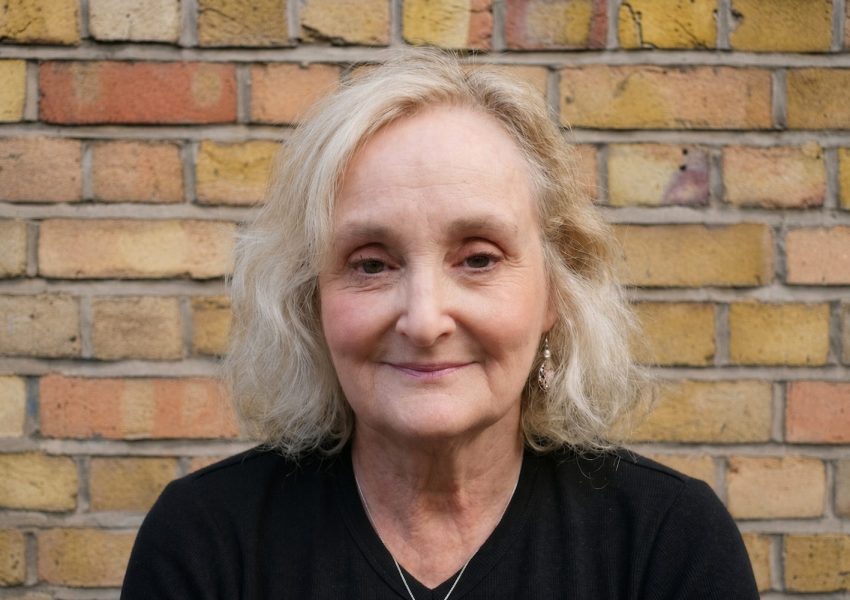
Long before she became involved in health technology, Gabrielle Epstein learnt an important lesson from the early days of personal computing.
After stepping away from clinical work for a period, she opened a computer business in the late 1980s, just as personal computers were becoming commonplace. What struck her was how often products were released before they were truly finished. Bugs would emerge, patches would be written, and over time those fixes would accumulate until the software bore little resemblance to what it might have been if it had been designed properly from the outset.
“You ended up with almost like a Frankenstein’s monster that probably, if you’d designed that unit from the ground up, wouldn’t look anything like that.”
Decades later, she still finds herself returning to that analogy. Not because she works in software, but because she believes healthcare has often evolved in much the same way.
Services adapt, processes are added and problems are solved one at a time, often under immense operational pressure. Rarely is there an opportunity to step back and ask whether the whole system has been designed in the right way.
That is one of the reasons she values her role as information governance specialist on the Thalamos Responsible Innovation Group (RIG). It creates the space to ask those questions before anything is built.
Starting in the right place
Epstein’s career has spanned far more than information governance alone. A forensic psychologist by training, she has led clinical services across the NHS, charities, prisons and independent healthcare, managed multidisciplinary teams, acted as a Caldicott Guardian for national organisations and spent years overseeing governance, research and quality improvement.
Looking back, she believes those experiences all point towards the same conclusion: “I’ve practised for about 30 odd years, and I still feel like I know very little. There’s always more to learn.” That curiosity shapes how she approaches product development.
Rather than treating governance as a final approval process, she sees it as part of the design itself. Before discussions move into development, RIG spends time understanding the problem, identifying potential risks and agreeing what success should look like.
“This is what’s so nice about starting this process with Thalamos because we start by scoping. We start by doing a really large scope that comes back to the RIG. We ask what the important points are, where are the pinch points, and what are the risks?”
For Epstein, that early thinking is not a luxury many healthcare organisations can afford. She added: “When you’re delivering on the ground, you’re delivering at pace with scarce resources. The ability to stand back and think about what we’re engaged in here does not happen.” Software development gives her that opportunity.
Governance in service of care
Epstein is careful not to describe governance as something separate from care itself. In her view, the two are inseparable.
“We’re engaged in a very, very serious business where people sometimes very sadly die,” she explained. “People’s lives are literally in the hands of people, particularly when they’re detained.”
That reality shapes how she thinks about information governance. When GDPR was introduced, she recalled organisations becoming frightened of sharing information. The legislation itself was not the problem, rather the fear of misunderstanding it.
“I think people potentially could have suffered as a result,” Epstein commented.
Her view is that governance should help organisations share information safely and lawfully, not discourage them from doing so. “My view is that we should be working to share more data rather than less.”
The responsibility, she explained, is to make sure information is protected, legislation is followed and organisations can demonstrate that they have acted appropriately. Done well, governance becomes an enabler rather than a barrier.
Data tells the story
Despite her governance background, Epstein describes herself as someone who simply enjoys working with data. The reason being is not a technical one, it’s because data tells stories.
She believes the information collected through healthcare reflects the experiences of the people moving through it. “The person’s experience… that’s reflected in the data.”
For her, that makes data one of the most valuable resources healthcare possesses. It reveals patterns, exposes variation and shows organisations where improvement is needed.
That perspective also explains why she values the mix of expertise within RIG. Clinical safety, legislative compliance, lived experience and information governance each tell part of the story and no one is sufficient on its own.
Building confidence before products reach practice
Although Epstein joined RIG after its foundations had been established, she says she was struck by the maturity of the processes already in place.
Her role now is to ensure those processes continue to evolve alongside legislation and emerging guidance, while helping the organisation remain focused on the people ultimately affected by every decision.
What has impressed her most, however, is not simply the governance framework itself but the way the wider team responds to challenge.
“I’ve never had a time when they haven’t been able to answer a question, or haven’t said, ‘I’ll have a look at it and come back.’” For Epstein, that openness is what makes responsible innovation meaningful.
She believes technology should never dictate how care is delivered. Instead, technology should adapt to clinical reality, minimise risk and make good decisions easier.
“The impression I get from Thalamos across the board is that the person experiencing these difficulties is always at the centre of our thinking.”
It brings her back to the lesson she first learnt decades ago. Patching problems after they emerge will always have its place. But the safest, most trusted systems begin by asking better questions before they are built. That, she believes, is where responsible innovation starts.
If you’d like to find out more about the structure and process Thalamos Responsible Innovation Group then visit our dedicated webpage or read about its origins in our feature.