159 new doors won’t matter if what’s behind them still can’t talk to each other
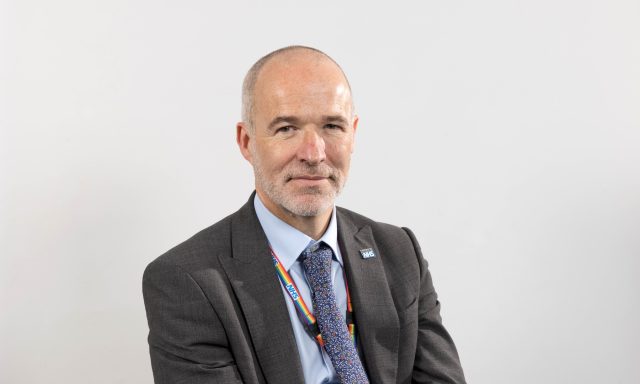
Zoe Seager
12 August 2026
There is a certain kind of hope that comes with a big number attached to a health announcement, and £343m, spread across 159 new NHS mental health facilities, is a big number.
A hundred new community mental health centres will offer walk-in support without a referral, and fifty-nine dedicated mental health emergency departments open this autumn, with further sites following from March 2027 — together more than doubling current provision. The announcement marks a move further than originally promised given the 10-Year Health Plan committed to around 85 mental health EDs backed by “up to £120m”. The department has since put £156m behind them.
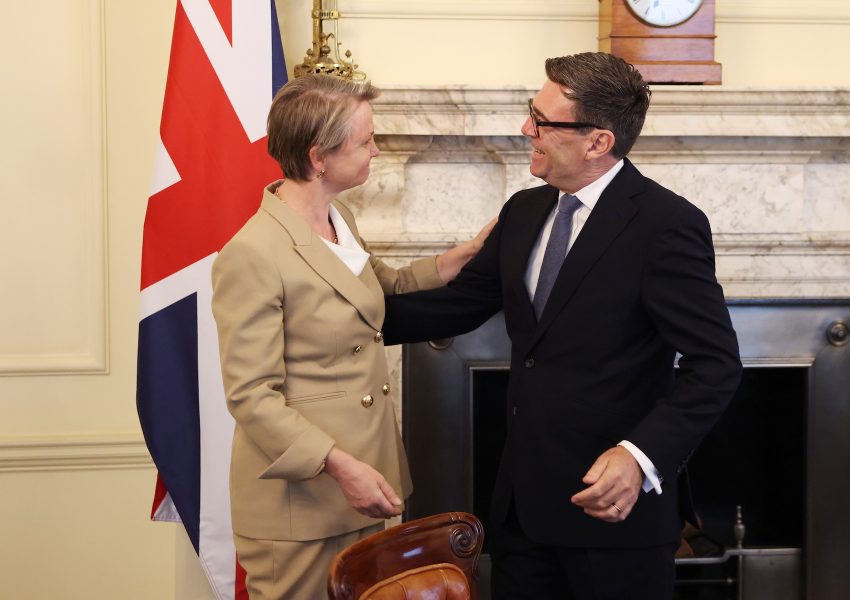
That is the kind of ambition the sector has been asking for, and Prime Minister Andy Burnham and Health Secretary Yvette Cooper deserve credit not just for backing it, but for going beyond what they first set out. Mind and the Royal College of Psychiatrists are right to welcome it, and just as right to keep pushing for more.
I have worked both sides of this system, first at the Department of Health and Social Care, where earlier versions of this model were already taking shape, and now at Thalamos alongside Mental Health Trusts, ambulance services, police and Local Authorities on the pathway beneath their day-to-day operations. Credit is due for taking work that began in the 2025 10 Year Plan through to a funded plan, and for putting more behind it than first committed. Others are already asking whether £1m a site buys the staff as well as the building — a serious debate, but not mine to add to here. My focus sits further down the pathway: a mental health emergency department can still, rightly, be somewhere to wait safely for the next step, that’s what it’s for. A walk-in centre can’t be that. It only works if it’s where the help itself happens, not a stop on the way to it, and that’s real progress. But a well-designed centre is only as good as what it can reach: a bed when someone needs one, a downstream service that already knows their history. Spend £343m on better rooms without fixing what connects them, and the rooms won’t be enough.
The responder gap doesn’t close because the door does
We have seen this pattern before. Right Care, Right Person shifted responsibility for welfare concerns away from policing, on paper. Dr Carolina Campodonico’s research, based on interviews with officers across England, found that risk itself doesn’t move just because policy says a different agency should own it. She calls it a responder gap: “The responsibility may be shifted in theory, but in practice, the risk has not gone away.” Someone still has to decide what happens next, and too often it is whoever happens to be standing there.
New emergency departments carry a version of the same risk. Diverting someone in crisis to a calmer, specialist setting instead of A&E is real progress, but the model is untested at this scale, and many people in crisis also have physical needs a mental-health-only unit isn’t built for. Split emergencies apart without a real link back between them, and the bottleneck just moves two doors down.
The community centres solve a different problem. Their job is reaching people before crisis, so wanting help doesn’t mean a waiting list until you’re bad enough to qualify for one. The risk there isn’t mental versus physical care, it’s everything recovery depends on: GP, housing, employer, local authority. A walk-in centre only replaces the waiting list if it’s genuinely joined up with what surrounds it, and someone’s journey doesn’t have to be re-explained at every step.
The person best placed to tell us what these front doors actually need is not in a planning meeting. Rosie Meadows, a Mental Health Advanced Practitioner at East of England Ambulance Service, sits at exactly the point where these centres will plug in. Ambulance crews, police, GPs and Mental Health Trusts, she told us in an interview, “all operate on separate digital systems.” This means clinicians arriving at an incident often can’t see a patient’s background or care plan, meaning longer job times and people repeating their story to every new professional they meet. Her ask was not more buildings; it was quick access to background information, and a way for what one service learns to follow the patient into the next.
Buildings, systems and process are experienced as one thing
Charlotte Burrows and Philip Ross, of the Design in Mental Health Network, made a point in conversation with Thalamos recently that applies directly here, even though they were talking about ward design rather than digital infrastructure: “Patients do not experience buildings, systems and processes separately,” Burrows said. “They experience one environment, and every part of it shapes how care feels.”
A calm, well-designed hub delivered through disconnected, paper-dependent processes will not feel joined-up to the person walking through its doors, whatever the architecture achieves. If these 159 sites are genuinely about the right care in the right place, the connective tissue between them needs the same seriousness as the buildings themselves.
We already know what closes the gap
This is not a theoretical problem, and at Thalamos we have seen what closes it. London is the clearest example where five of the capital’s Mental Health Trusts, the Metropolitan Police, City of London Police, British Transport Police, Local Authorities and a growing number of acute hospitals are now connected through a shared digital Mental Health Act pathway supported with integrations with a shared care record, none of them reporting into the same structure or ever arriving at connection by accident.
What changes when they are joined up is rarely dramatic on its own. A detention recorded by one trust becomes visible to the acute hospital treating that same person for an unrelated physical health need a week later. An AMHP doesn’t have to make three phone calls to establish what has already happened that day. None of that shows up in a press release, but it is a direct answer to the responder gap Campodonico describes and the separate systems Meadows works around every shift. Risk does not wait patiently for the right agency to notice it. The moment information travels with the person, services stop working blind, not because any one of them has more resource, but because none of them are operating on a partial picture anymore.
What we’d ask of anyone commissioning these sites
None of this is an argument against the investment. It is an argument for spending the next phase of it wisely.
(1) Make interoperability a condition of funding, not an afterthought. Every one of the emergency sites will need to exchange information with, where appropriate, ambulance services, police, GPs, Local Authorities and other neighbouring Mental Health Trusts. This should be specified alongside the estates brief, not bolted on once a site is operational.
(2) Give frontline staff, not just boards, a say in what “connected” means. Rosie Meadows’ asks cost almost nothing to state and everything to deliver. Ask the people who will use these pathways daily what they need, before the ribbon-cutting.
(3) Measure coordination, not just throughput. Footfall through a new hub is easy to report. Whether it represents someone genuinely provided care and diverted from crisis, and whether their information followed them there, is harder, and matters more. As Jim Hughes of Mersey Care NHS Foundation Trust put it to us recently, it’s important to “invest in equity, not activity.”
None of this diminishes what has been announced. If anything, it’s the reason to take it seriously enough to get right. A hundred and fifty-nine new doors is a great commitment. What determines whether it changes people’s experience of mental health crisis care is what happens in the corridor behind each one, and whether the system connecting them has had the same attention as the buildings themselves.
Stay up to date with insights like this one by following Thalamos on LinkedIn or joining our mailing list.
Read some more Thalamos articles:
About the author

Zoe Seager
Client Director
Zoe is Chief Client Officer at Thalamos, leading all the client facing functions including programme implementation, customer success and business development. She came to Thalamos from the Department of Health and Social Care where she was Deputy Director for Mental Health Strategy and Delivery, working across Government, the NHS and public health bodies to develop and deliver strategies, policies and programmes to improve mental health outcomes in England. Before joining the civil service, she developed and delivered strategic projects and programmes for Wellcome, a philanthropic trust that supports science to solve urgent health problems.
Follow Zoe Seager