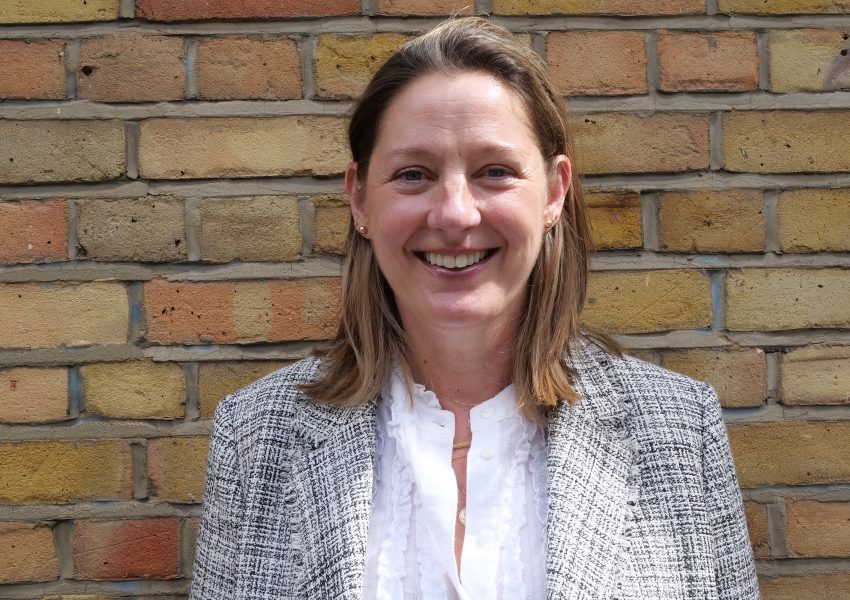
When Debbie Martin first heard about the idea behind Thalamos, she had already spent decades applying, teaching and researching mental health law.
Qualified first as a social worker, she trained as an Approved Social Worker before moving into education where she now teaches Approved Mental Health Professionals (AMHPs), doctors, nurses and other health and social care professionals. Alongside her academic work, she provides specialist AMHP supervision, has written extensively on mental health and capacity law and recently completed an independent investigation following a mental health related homicide.
So, when Thalamos co-founder Arden Tomison approached her with an idea for a digital platform designed to improve practice under the Mental Health Act, Martin viewed it through the lens she always applies: would it genuinely help people make better decisions?
“I was happy to help,” she recalled. “I loved the idea of a system that could improve practice and patient outcomes.”
What impressed her then, and has kept her involved as a member of the Responsible Innovation Group (RIG) ever since, was that the ambition never shifted.
“I feel that consistently they have held steady to that, which is great, especially when you’re trying to sell a product.”
Martin’s role within RIG is straightforward but critical. She helps ensure that every feature, workflow and decision is grounded in the law before it is ever built.
Legislation like the Mental Health Act and Mental Capacity Act set the framework, but she is equally attentive to the case law that shapes how it operates in practice.
“Whilst we have Acts of Parliament, we also have cases that go before the courts. It’s those judgments that alter how we interpret the Acts. The Acts rarely change, but we do operate differently as a consequence of case law.”
That distinction matters for digital tools as a system built on an outdated or incorrect legal interpretation does not just create compliance risk. It can embed that error into everyday practice at scale.
She is also alert to the ways software can inadvertently guide users toward assumptions that have no legal foundation. That concern came into sharp focus during work with police partners, when she identified that a test being used to establish incapacity was simply wrong.
“It could lead you to establishing incapacity and acting in the best interests of someone who actually had capacity,” she explained.
The assumption had been that because the police operate the law, they must know it. Martin’s job was to recognise where that assumption broke down and correct course before it was built into the product.
“There are countless examples of correction which has meant we’ve gone down the right road rather than the wrong one,” she added.
Building in, not bolting on
For Martin, the value of RIG lies in when it intervenes, not just how. She has worked in environments where governance input arrives once a product is already finished. The result, in her experience, is inevitably superficial.
“The worry would be that it becomes tokenistic. It would almost be a rubber-stamping exercise,” she commented.
The RIG meetings work differently. Materials arrive in advance, giving members time to think before the discussion rather than reacting in the moment. Different perspectives are in the room together, and they do not always agree.
“Something I might see as particularly important may be seen as less so elsewhere, and vice versa. I think it’s a more meaningful, authentic way of bringing those perspectives into the discussion.”
She is candid about how that may feel from the other side of the table. When a team has put significant work into a product and a group of external reviewers immediately begin identifying problems, it can sound like criticism. However, “the conversations are intended to ensure patient and professional safety,” Martin said.
Data as the real innovation
Martin is clear-eyed about where she believes Thalamos has made its most significant contribution.
Before systems like this existed, data about how the Mental Health Act was operating in practice was fragmented at best. Local Authorities and Mental Health Trusts might collate some data, while the government published basic detention statistics. But there was no consistent, comparable picture of what was actually happening to people as they moved through the system.
“We just had bits of paper that floated about. We had no robust, consistent or large data sets. No comparisons across geographical areas, nothing,” she added.
What digital infrastructure makes possible is understanding those pathways in real detail: where delays occur, where practice varies, where the system fails the people it is supposed to serve.
If you’d like to find out more about the structure and process Thalamos Responsible Innovation Group then visit our dedicated webpage or read about its origins in our feature.