Five NPCC awards nominations for British Transport Police’s digital mental health programme
05 October 2026
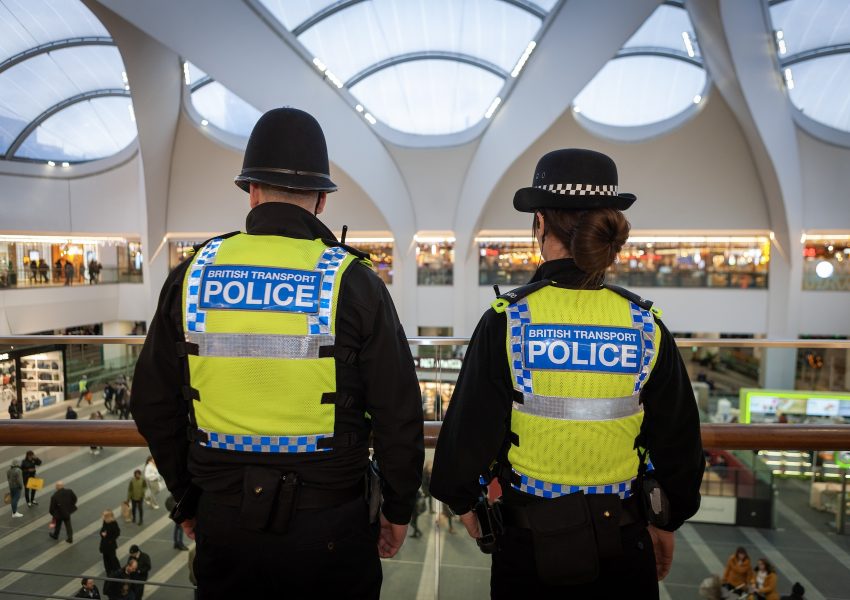
British Transport Police has been shortlisted for five NPCC awards for a digital Section 136 process built with Thalamos that has cut the time officers spend at places of safety with people in mental health crisis by almost two-thirds.
The nominations, at the National Police Chiefs’ Council (NPCC) Innovation and Digital Awards 2026, span Excellence in Innovation, Pioneer of Policing Data and Excellence in Business Change, alongside Innovation and Digital Leader, which recognises Inspector Christopher Sutherland’s role leading the programme, and Excellence in Productivity & Value. Winners will be announced alongside the NPCC Innovation and Digital Summit 2026 in October.
All five shortlisted entries centre on the same programme: the national rollout of MH Forms by Thalamos, which replaced paper-based Section 136 handovers with a live digital workflow connecting BTP officers and NHS staff across England and Wales, where Section 136 legislation applies (BTP also polices Scotland, but Scottish mental health law differs and sits outside the programme). Officers complete mental health assessments digitally and share them with NHS organisations before or during transport to a health-based place of safety, rather than relying on handwritten paperwork, duplicated records and phone calls.
The system went live nationally on 31 July 2025, following a pilot in Liverpool and Manchester that May. Within six months, 95% of officers across BTP’s seven divisions were using it, and 609 live Section 136 incidents had been digitally recorded. Average officer time spent at health-based places of safety fell by 63%, from 219 minutes to 79, delivering an estimated £45,000 in savings over six months, or roughly £90,500 annualised. Consultation with a healthcare professional prior to detention rose by 9%, and handovers completed within four hours rose by 6%.
Sutherland, who has led the programme’s design and national rollout, said the change has been as much cultural as technical. “We’ve got two different cultures between the NHS and policing,” he explained, “and I think the digital form allows us to bridge that a little.” He added that the ambition throughout was consistency for officers and patients alike, wherever in the country an incident happened. “We wanted officers to feel confident that wherever they were deployed, it was the same process and it was accessible. One of the things I always say is that this is about removing the postcode lottery for our communities.”
Thalamos chief executive Arden Tomison said: “BTP didn’t just buy a piece of software. It worked with us, and with NHS partners, to agree how mental health data should be captured and shared nationally. That’s a harder thing to get right than the form itself, and it’s why more than 200 NHS sites are now part of it.”
Sutherland connected the awards recognition to BTP’s wider national role. The force also manages the NPCC’s suicide prevention portfolio and sits on many of the regional forums shaping how policing and mental health services work together. “Being recognised for driving that change, and for being change agents, puts us at the forefront of supporting people in crisis,” he said.
BTP’s programme will now be judged against entries from forces across the UK, with the five nominations covering the design of the system, the national data it has produced, the adoption work behind its rollout, and Sutherland’s own leadership of it.
Our longer feature, How British Transport Police built a national system for mental health crisis handovers, covers why BTP built its own programme, what the pilot showed before national rollout, and why local NHS relationships mattered more than national ones. It also looks at the gap that’s still unsolved: what happens to a person’s record when they cross into another force’s system.