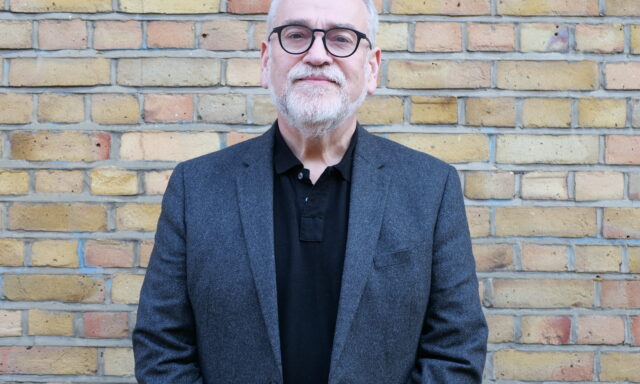
Turning policy into practice: Viral Kantaria on leading integration across Coventry & Warwickshire
06 January 2026

When Viral Kantaria describes his role, he calls it as an unusual type of job. Chief Integration Officer is not a title you see on many NHS boards, and in mental health it is even less common. “There may well be some others,” he reflected, “but I don’t know any.”
His post was created to join commissioning and provision together for mental health, learning disabilities and autism across Coventry and Warwickshire. It sits half in the trust, half in the ICB, and relies on navigating boundaries. “The vast majority of services are provided by the Partnership Trust, but not all of them,” he explained. “The role is about joining things up as far as possible — contractually where we can, and practically where we cannot.”
It is a role that plays to his background. Kantaria began his career in government, working in ministers’ private offices for Paul Burstow and Norman Lamb, before moving into policy roles on crisis care, legislation and later community mental health at NHS England. He sat on Professor Sir Simon Wessely’s working group for the independent review of the Mental Health Act, then stepped outside mental health to become Chief of Staff to the National Chief Operating Officer through the pandemic. What brought him back, he said, was distance: “I felt very far from making change for people, and I wanted to do it locally.”
Since arriving in Coventry and Warwickshire, he has found himself working across two quite different places. Coventry, with its diversity, universities, migrant populations and some deprivation, contrasts with Warwickshire’s older and rural communities, pockets of affluence and strong sense of local identity. The principle he stands by is equity across the footprint, but with tailoring to need. People with similar needs, he added, should “experience the same sort of offer” wherever they live, even if the offer is adapted locally.
Financial reality and board priorities
That sense of equity runs straight into the financial climate. “The NHS now feels in a different place,” Kantaria commented. “Financially, things are very difficult, things are very tight.” For mental health and for learning disabilities and autism there are concerns about de-prioritisation. The system priority is clear: “Financial balance is number one.”
Coventry and Warwickshire Trust have not historically carried a large deficit. “We have in the past done quite well on that,” and most of the mental health sector is in a similar position, he added. But system finances are not separable and 2026/27 feels very challenging across the board. “You cannot look at our bottom line in isolation from the financial health of the rest of the system.” That makes efficiency expectations of “several per cent every year” a live challenge. “Where do you actually take money out in order to deliver that?” he asked. The consequence of falling behind is stark: loss of flexibility on capital for estates improvement and loss of autonomy.
Digital transformation under pressure
A second priority is digital, with the Trust preparing to move over to a new electronic patient record. The shift from CareNotes, which was affected by a national cyber attack, to SystmOne has become a board-level focus. “It carries risk,” Kantaria said, but is also “the enabler” to everything else in terms of digital transformation.
That means preserving data integrity, training teams who have never used an EPR, and in some cases moving directly from paper to digital. “There is also big work around data quality,” he added. The experience of the cyber incident left many staff sceptical. “A lot of people are quite cynical about basic things like use of an EPR,” he acknowledged.
To win confidence, the Trust has launched an internal communications campaign and created digital champions to spread awareness. “The key is being honest with ourselves,” Kantaria explained. “Let’s not overblow what the benefits will be.” Some gains will take time to show. The narrative must, he said, be grounded in patient care: accurate information, care plans that are retrievable and editable by everyone involved, and data that can flow to national datasets to demonstrate activity and outcomes.
Other innovations, such as ambient voice technology, are being considered but will follow only after the EPR is stable. “All of these things have to follow that kind of focus,” he explained, because of limited staff capacity to absorb change.
Integration and local delivery
For Kantaria, the integration agenda is not just contractual but practical. Section 117 aftercare is a live priority, as are crisis pathways and scoping what 24/7 neighbourhood mental health means and how the Trust is going to create those models. Data, particularly from the Mental Health Act and AMHP activity, is central to designing earlier and more tailored interventions.
Partnerships with local councils, acute and community providers, primary care and the third sector are essential. Safe havens, for example, are provided under separate contracts but must be part of the same crisis pathway. “The role is about joining things up,” he said simply.
Watching the Mental Health Bill
Kantaria watched the Mental Health Bill, which received Royal Assent in December, from both sides. He was involved in the review from NHS England, and is now preparing to implement change locally. “It has taken a long time to get to this point,” he noted, “and you can tell that.” The review contained both legislative and non-legislative recommendations, and he feels the non-legislative ones have been under discussed.
On the Bill (and now new Act) itself, he is cautious. “It is a little bit Frankensteiny,” he put forward, with clear changes such as new time limits and safeguards but “serious concerns about the resourcing implications”. He is particularly concerned about learning disabilities and autism. Removing the ability to detain under Section 3, while retaining Section 2 and criminal justice routes, creates “a dissonance”. The impact assessment implies “eye watering sums of money” for social care and supported housing, which he has not seen evidence of being realised.
Operational risks are also clear: SOAD supply, tribunal timelines and workforce capacity. “If you don’t address the capacity gaps, the new Act is going to suffer from the same issues that the old Act has suffered from,” he warned. Coventry and Warwickshire are preparing internally, with a Mental Health Legislation Committee and board development days, but he argues for national support. “There needs to be more clear leadership and probably a national framework around training and organisational development,” he added. “Ward to board.”
Back to practice
At root, Kantaria’s philosophy has not shifted since his time at the centre. Legislative reform can matter, but much of the real change comes down to practice and models of care. Asked about the wider aim of detaining fewer people, for shorter periods, he is clear: “The aim is right. I support it.” But the aim must be supported with investment, particularly continued commitment to community mental health. The Long Term Plan years, he said, were only making up for a decade or more of neglect.
The integration brief is about keeping that investment joined up and making it work locally. It means balancing equity with tailoring across two different places, joining contracts where possible, and building practical partnerships where not. Right now, it also means delivering the EPR cutover safely, because that is the foundation for everything else. And now it also means looking across to new neighbours in a newly-clustered ICB with Herefordshire and Worcestershire.
There is no slogan in how he describes it. Just a sequence he returns to: get the basics safe, be realistic about bandwidth, build the narrative around patient care and evidence, and use the levers that change practice.
This article is part of a wider interview series with Mental Health Trust and ICS executive board members. Others of interest include:
- Getting the culture right so we can flourish: Sean Duggan on Sussex Partnership’s next chapter
- Empower, don’t control: how Feroz Patel is reshaping finance at Midlands Partnership NHS Foundation Trust
- Leading through uncertainty: Arun Chidambaram on change, culture and the future of mental health care